Your customer service team receives hundreds of repetitive messages every day, and every one of them expects an instant reply, at any hour. That raises the question you came here to answer: what is a chatbot, and is it really the fix?
Many leaders hear the term without grasping the gap between canned replies and a system that understands customers and completes requests. This guide covers the types, real use cases, and how to choose.
What Is a Chatbot and How Does It Work?
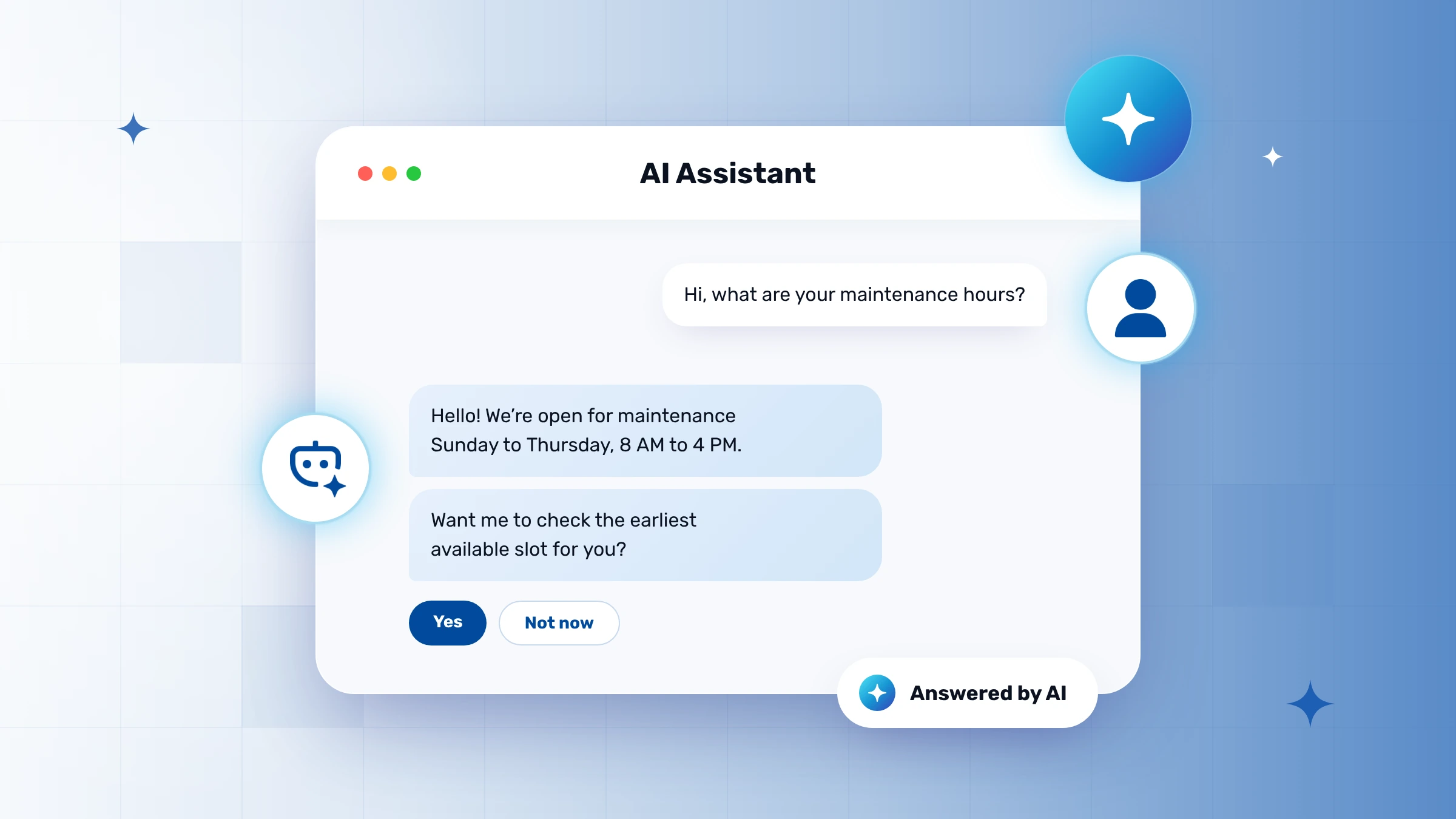
An AI chatbot is a software program that simulates human conversation through text or voice and answers user questions automatically, around the clock. It runs on websites and messaging apps such as WhatsApp, cuts waiting time, and eases the load on support and sales teams without hurting the experience.
Behind that simplicity, three layers work together. It starts with natural language processing, which turns the customer’s sentence into structured data. Next comes intent recognition, which identifies what the customer actually wants. Finally, the system searches a knowledge base for the right answer and delivers it in natural wording.
That is why organizations are turning to chatbots: customers now expect answers in seconds, on any channel, in their own language, and a chatbot meets that expectation without a matching rise in headcount.
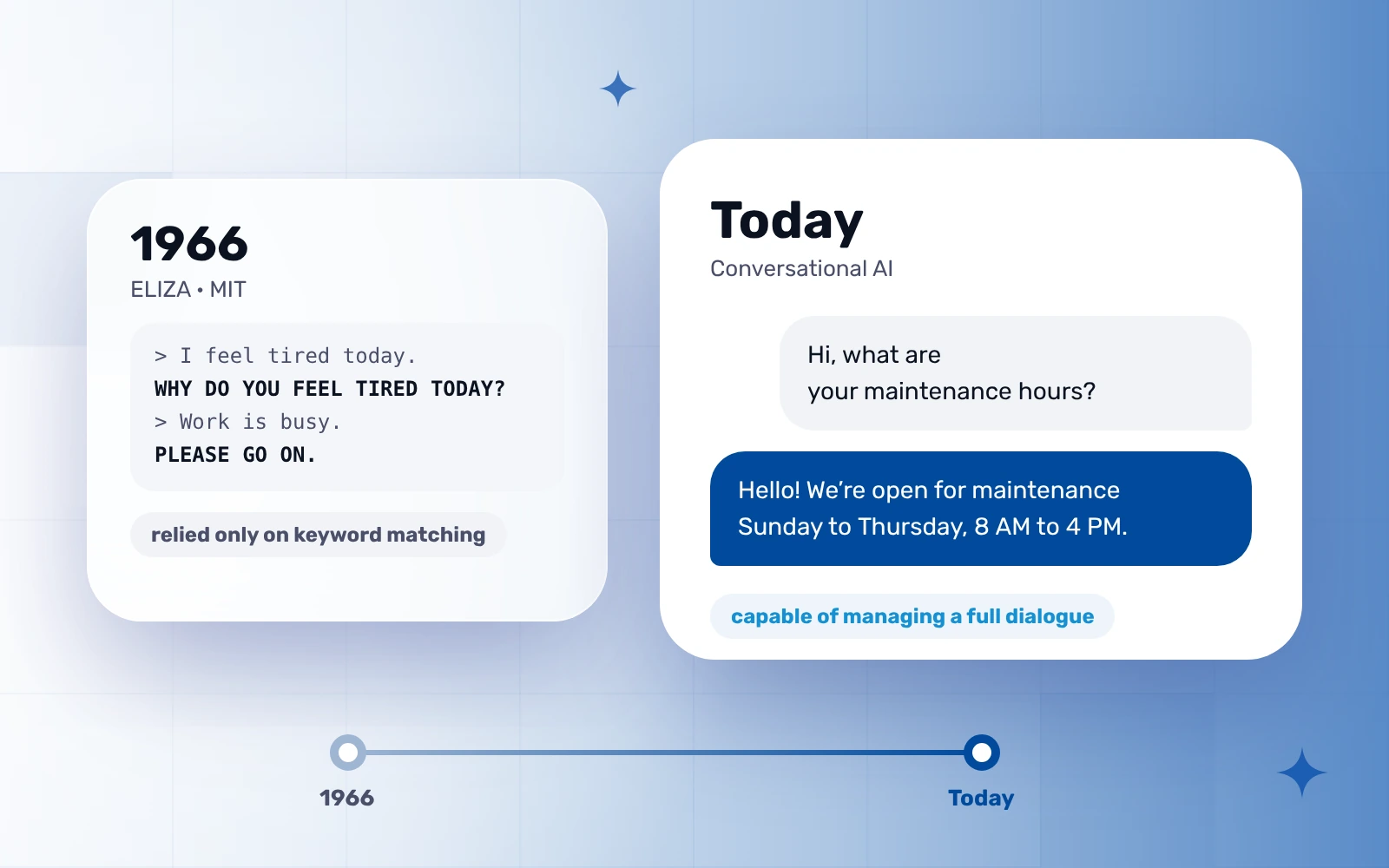
The idea is not new. One of the first chatbot programs, ELIZA, appeared in 1966 at MIT and relied only on keyword matching. Today, we have moved to conversational AI capable of managing a full dialogue.
Types of Chatbots: Which One Fits Your Organization?
Types of chatbots vary widely, but in practice they fall into three groups:
Rule-based chatbots follow predefined paths and buttons. They suit fixed questions but stumble on any unexpected phrasing.
- AI chatbots understand dialects and varied phrasing and improve with every conversation.
- Knowledge-grounded chatbots answer from your company’s documents and policies using enterprise RAG solutions, which reduces errors and raises trust.
Rule-based chatbots remain economical for simple flows like booking an appointment or tracking an order, but trouble starts when questions widen and customers must rephrase or wait for an agent.
Chatbot vs AI Agent: What’s the Difference?
A chatbot answers the question; an AI agent completes the task. That is the shift organizations are moving toward, and you can explore it through WideBot’s AI agent.
Imagine a customer writing: “I want to return my order.” A traditional chatbot shows the return policy, while an AI agent checks the order, opens the return request, and sends the customer a tracking number.
Enterprise Chatbot: Real Scenarios and Getting Started
The value of an enterprise chatbot doesn’t show up in slide decks but in everyday moments:
- Banking: A customer asks at night why a purchase was declined; the AI chatbot checks the status and explains the reason instantly, sparing a branch visit or a call center.
- Healthcare: A patient books and reschedules an appointment over WhatsApp in minutes, cutting missed slots and easing the front desk.
- E-commerce: A shopper tracks a shipment and asks about returns without waiting for an agent.
In each case, customer experience improves because answers arrive at the right moment, freeing human teams for cases that need judgment and empathy.
What Do the Numbers Say About Customer Trust in Chatbots?
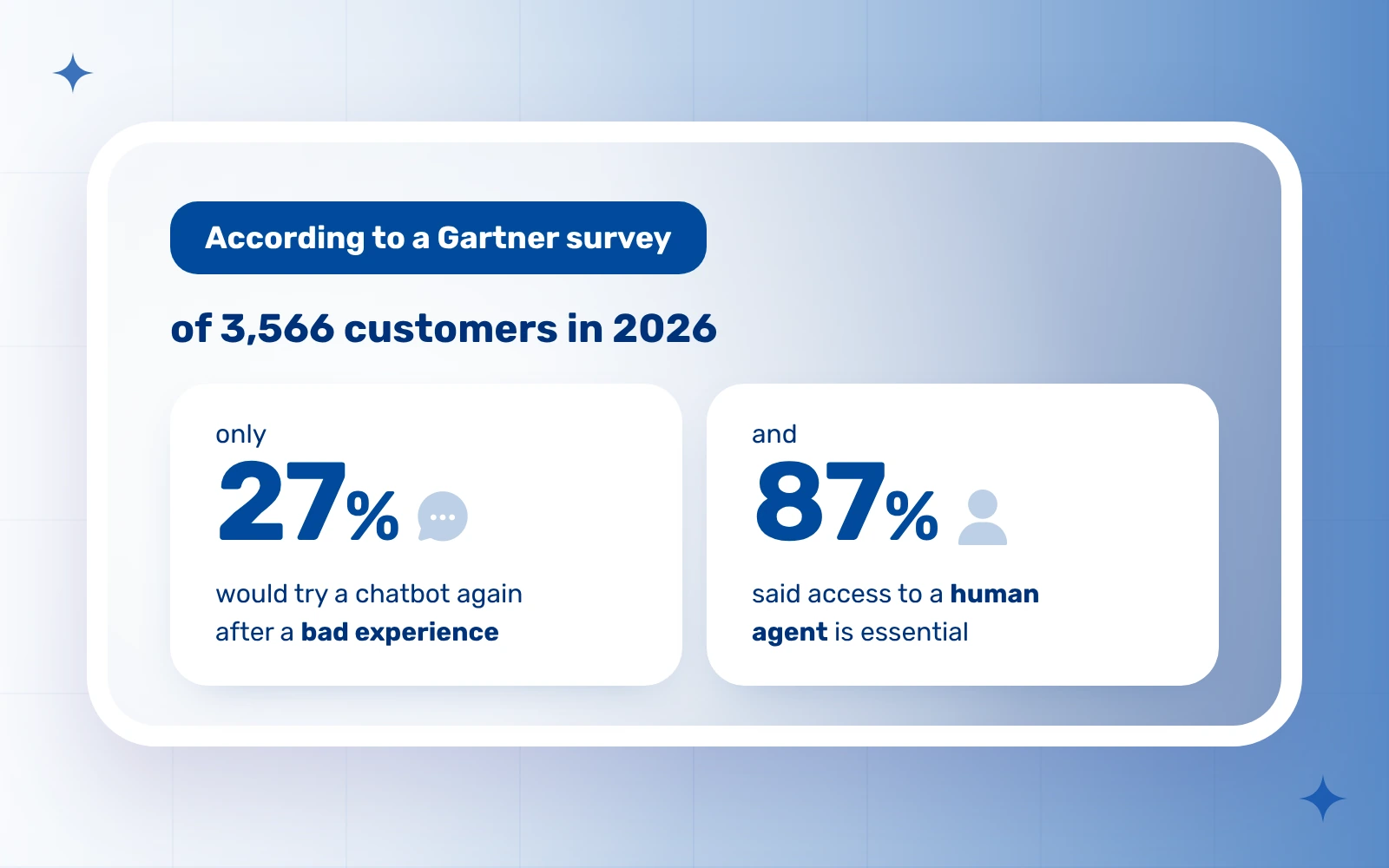
A chatbot that solves a defined set of problems well earns more trust than one that tries to handle everything and often fails.
That is why knowing what is a chatbot is only the starting point; what matters is knowing where it adds measurable value in your organization, and where you need a more autonomous agent.
How to Start with a Chatbot: Selection Criteria and First Steps
When evaluating solutions, focus on the criteria that actually decide success:
- Arabic and dialect support: customers in the Gulf write differently from customers in Egypt.
- Integration with your systems: CRM, calendar, and payment systems, so it acts instead of merely replying.
- Smooth human handoff: for sensitive cases, with the full conversation context passed along.
- Security and compliance: protecting customer data under local regulations.
Conclusion
So, what is a chatbot? It is the first practical step toward automating customer interaction, but not the end of the road. Organizations that succeed start with it to resolve repetitive questions, then move to AI agents that complete tasks instead of only replying.
To build this journey in Arabic and to enterprise standards, explore WideBot’s enterprise AI solutions.
FAQs About What Is a Chatbot
What is a chatbot and does building one require coding?
A chatbot is a program that simulates conversation with a user through text or voice and answers their questions automatically. Building one no longer demands complex coding, as enterprise platforms let you design flows and connect content through simple interfaces, while linking to internal systems needs limited technical support.
How long does it take to launch a chatbot inside an organization?
It depends on the scope, content readiness, and number of integrations. A single, well-defined flow can launch relatively quickly, while multi-channel, multi-system projects need phased rollouts that start with a limited pilot and expand based on results.
Will a chatbot replace the customer service team?
No, it redistributes effort within the team. The chatbot handles repetitive questions and routine tasks, while staff focus on complex and sensitive cases that need judgment and empathy. With a well-designed handoff to a human agent, the two complement each other rather than compete.
What is the difference between an enterprise chatbot and tools like ChatGPT?
ChatGPT is a general-purpose language model built for many uses, while an enterprise chatbot is connected to your company’s knowledge and systems and follows its policies and permissions. The first suits general use; the second suits customer service with greater accuracy and governance.
How do I start with a chatbot that fits my organization?
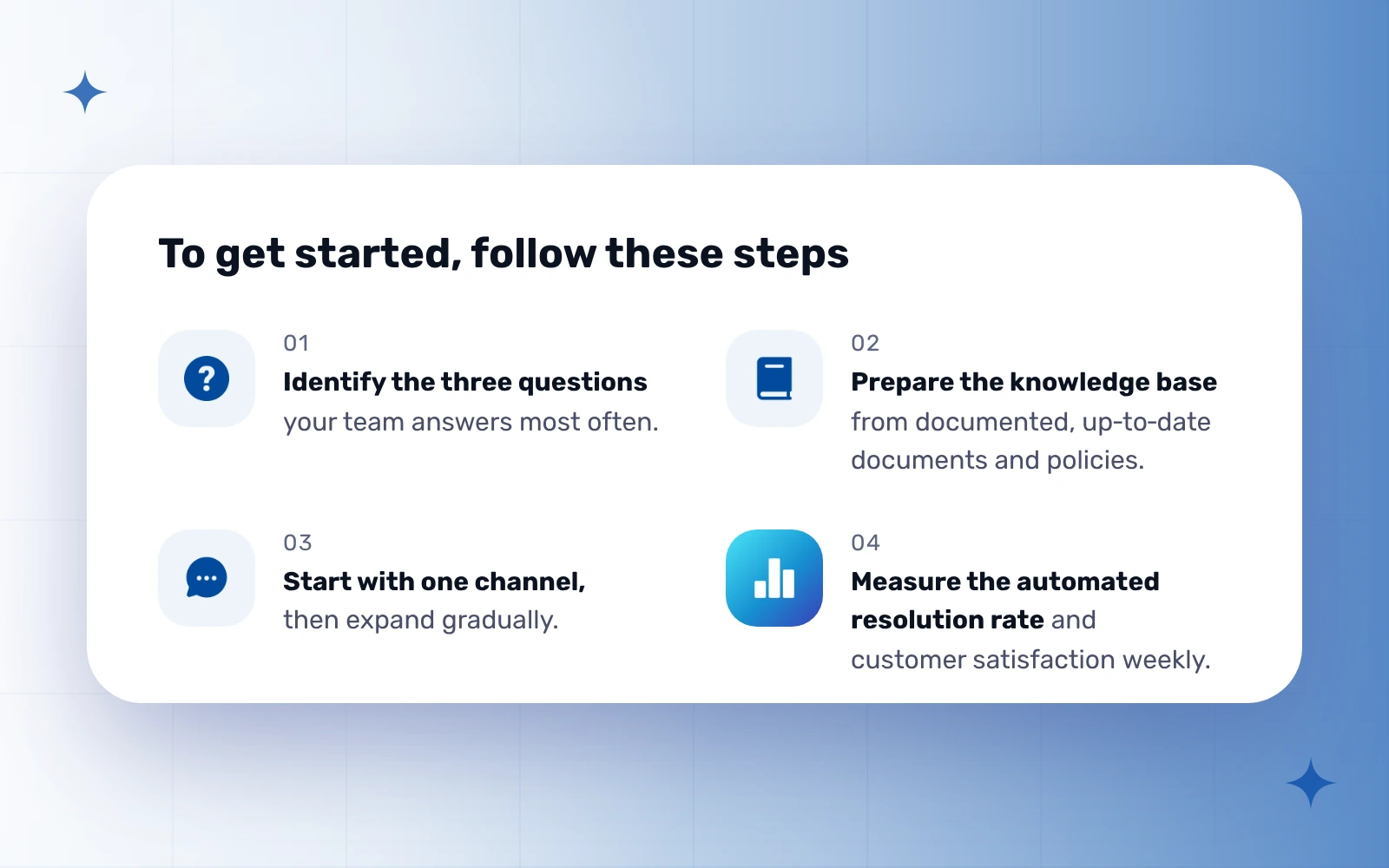
Start by identifying your most frequent questions, then try WideBot’s chatbot for serving customers on your website and WhatsApp. If you plan to automate task execution rather than replies alone, explore the AI agent.
Ready to move customer service from replying to doing?